

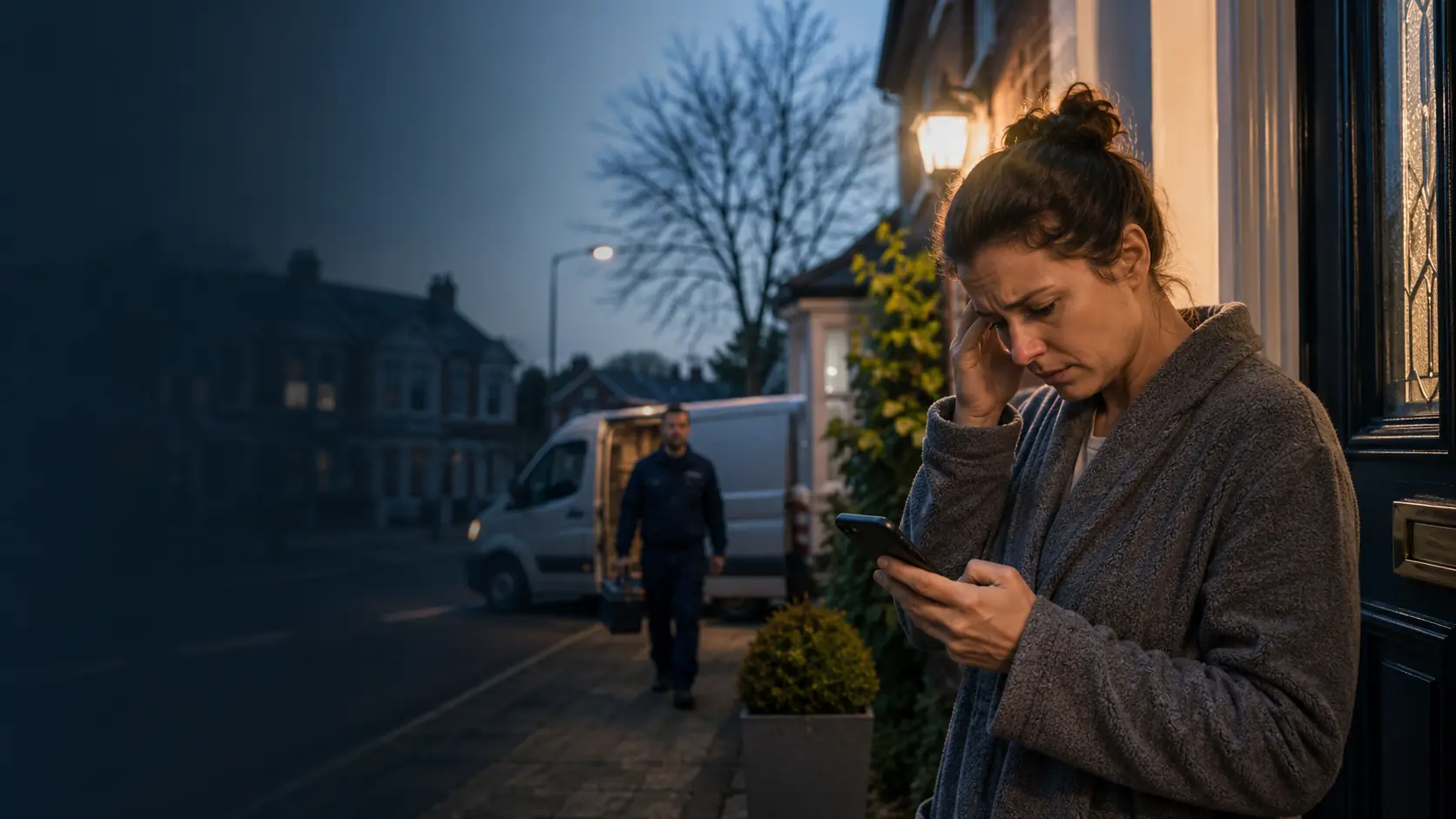
The locksmith scam starts before anyone reaches your door
Founder perspective
The locksmith scam starts before anyone reaches your door
The safest locksmith decision is the one you make before you ever need one.

Most people think a locksmith scam begins when someone turns up at the door, drills the lock and hands over a bill far higher than expected.
In reality, the scam often starts much earlier.
It starts in the few stressful minutes after someone searches “locksmith near me”. That is the moment rogue operators are built to exploit. You are locked out. You may be cold, tired, worried about children, pets, work, school runs or an elderly relative inside. You are not calmly comparing credentials. You are trying to get back in.
And that is exactly why this issue matters.
At LockFit, we believe the safest locksmith decision is the one you make before you ever need one.
This is not just a rogue trader problem. It is a panic-search problem.
When people talk about locksmith scams, the advice is usually the same: check reviews, ask for ID and avoid suspiciously cheap prices.
That advice is important, but it does not go far enough.
The bigger issue is that most people only choose a locksmith when they are already under pressure. It is an emergency purchase, made at speed, often from a mobile phone, with little opportunity to establish who is really behind an advert, search listing or website.
A BBC London investigation exposed just how easily that urgency can be exploited. In January 2026, a locksmith was secretly filmed increasing an initial £40 quote to £376.80 within minutes after claiming that the lock needed to be drilled. An expert had previously opened the same lock in seconds, without causing any damage, and identified five non-destructive methods a properly trained locksmith could have used.
The investigation also highlighted the case of an 85-year-old couple who expected to pay £49 to regain entry to their home but were eventually presented with a £2,802 invoice. The work caused such extensive damage that they then had to pay a further £2,244 to replace the door and frame.
These are not isolated incidents. The Guardian has separately reported a 66% increase in overcharging complaints between 2021 and 2025. A recurring pattern is the “bait and switch” model: an artificially low price wins the call, then additional charges, unnecessary drilling and replacement parts rapidly inflate the final bill.
London Trading Standards has also warned that rogue operators deliberately target customers when they are at their most vulnerable, often late at night or during poor weather, leaving people paying hundreds or even thousands of pounds more than expected for relatively straightforward work.
The problem, therefore, is not simply that rogue locksmiths exist. It is that the structure of an emergency search makes them difficult for customers to distinguish from legitimate local professionals until it is too late. That makes transparent pricing, visible local accountability and a verifiable national network more than marketing messages. They are essential trust signals at the precise moment a customer is least able to take a risk.
People are not being scammed because they are careless. They are being scammed because the situation is designed to make careful decision-making difficult.
The cheapest search result can become the most expensive decision
One of the most common warning signs is a very low advertised price.
It might look like a simple call-out fee. It might say “from £39”, “from £49” or “from £59”. It might appear professional. It might even look local.
But in many scam cases, that low price is not the real price. It is the hook.
Once the person arrives, the story changes. The lock may suddenly be described as more complicated. Drilling may be presented as the only option. Extra charges may appear for labour, parts, VAT, emergency attendance or replacement mechanisms.
By that point, the customer feels trapped. They are outside their own home. The lock may already be damaged. They just want the situation over.
The “cheap locksmith” problem is not really about price. It is about pressure.
An implausibly low headline figure creates the call. The pressure of the situation makes the inflated final price harder to challenge.
A good locksmith should slow the situation down, not turn up the pressure
A professional locksmith should ask questions before they arrive:
- What has happened?
- Is the key lost, snapped, stolen or locked inside?
- What type of door is it?
- Is the lock damaged?
- Is anyone vulnerable inside?
- Is there another safe way to gain access?
Those questions matter because good locksmithing is not just about opening a door. It is about choosing the right method, causing as little damage as possible and helping the customer understand what is happening.
One of the clearest red flags is a drill-first approach. A skilled professional locksmith will normally try non-destructive methods first, with drilling usually treated as a last resort.
There are times when a lock genuinely has to be drilled or replaced. But that should be explained clearly before the work is carried out, not presented as a surprise after the fact.
Fake local is the new rogue trader van
Years ago, you might have judged a tradesperson by the van, the uniform, the business card or a word-of-mouth recommendation.
Today, many people judge by search results.
That creates a new problem. A business can look local online without being genuinely local. A listing can appear near you without the person being part of your community. A website can use place names, urgent language and low prices to create a sense of trust very quickly.
That is why we believe customers should look beyond the first search result. Ask who is attending. Ask whether the person on the phone is the locksmith or a call centre. Ask what the likely price range is before anyone travels. Ask what payment methods are accepted. Ask whether non-destructive entry will be attempted first where appropriate.
A legitimate locksmith should not be offended by those questions.
Our advice: save a locksmith before you need one
You probably have a saved number for your breakdown cover, your GP, your insurance provider, your vet, your school or a trusted family member.
But most people do not have a locksmith saved until the day they need one.
That should change.
The best time to choose a locksmith is not when you are locked out in the rain. It is when you are calm, safe and able to check who you are trusting with access to your home.
Find a locksmith you would be comfortable calling in an emergency. Save their number. Share it with family members, tenants, elderly relatives or anyone who may need help quickly one day.
It is a small step, but it can make a huge difference.
What customers should expect from a locksmith
At LockFit, we believe emergency locksmithing should be clear, calm and accountable.
- Customers should know who is coming.
- They should understand the likely cost before work begins.
- They should not be pressured into unnecessary work.
- They should have the options explained clearly.
- They should expect non-destructive entry to be attempted where appropriate.
- They should be told why drilling is necessary before it happens.
- They should feel safer after the visit, not more vulnerable.
A locksmith is not just someone who gets you back through the door. They are someone you trust at one of the most stressful moments in home security.
Before you search “locksmith near me”, know who you would trust with your keys
Nobody plans to get locked out. Nobody expects a key to snap in the lock. Nobody expects a bag to be stolen or a door to fail late at night.
But you can plan who you would call.
Do not wait until you are locked out to choose who gets in.
Kevin Russell
Founder and Managing Director of LockFit
Take one minute now
Find and save your local LockFit locksmith
Enter your postcode and we’ll show the LockFit locksmith who covers your area, so you can save the right local number before an emergency happens.
Who covers your area?
Enter your postcode for your nearest approved LockFit locksmith.
Local engineers, not a call centre. 24/7 · No call-out fee · From £95.
Sorry, the comment form is closed at this time.